Scrap Fabric Lavender Sachets: Stitched and Tied Styles
Sew small lavender sachets from cotton scraps in two styles, a square stitched shut and a refillable bag tied with ribbon.
Project at a glance
Materials
- Tightly woven cotton or linen scraps
- Dried lavender buds, about 1/4 to 1/3 cup per sachet
- Uncooked white rice (optional)
- Narrow ribbon, about 10 in (25 cm) per tied sachet
- Thread and a hand sewing needle
- Sheet of paper for a funnel and a spoon
- Pins or clips
- Scissors or rotary cutter, ruler and mat
- Iron
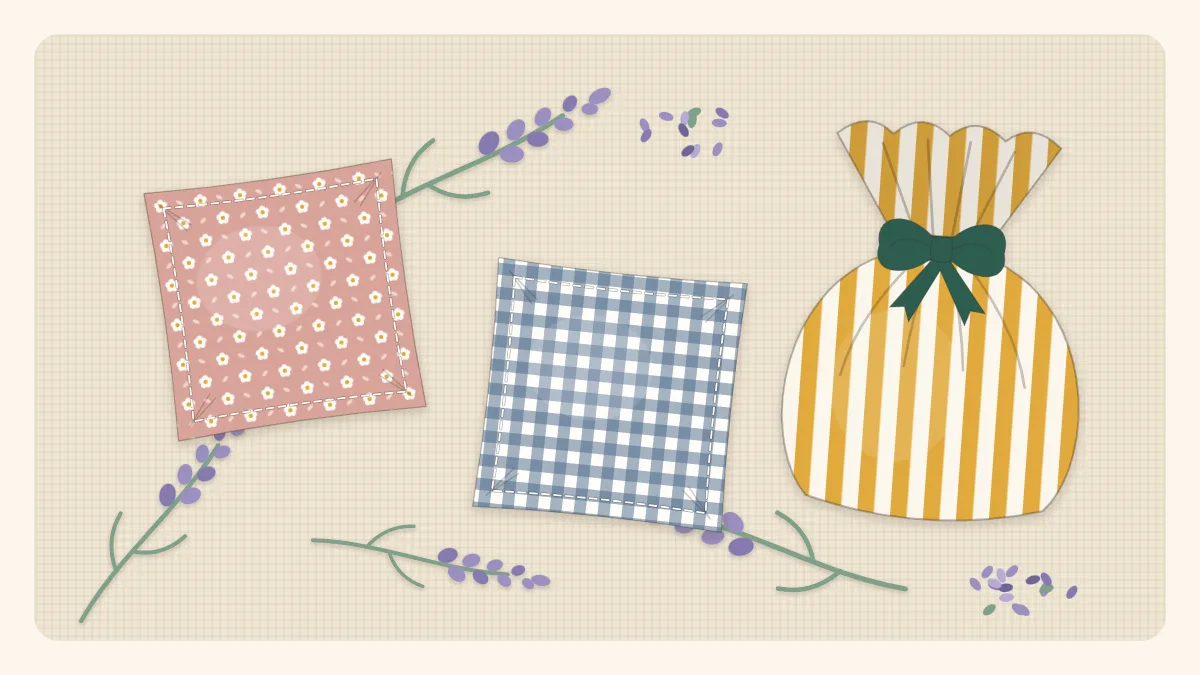
Two small squares of cotton and a scoop of dried buds are all it takes to make scrap fabric lavender sachets. They are among the smallest sewing projects there are, which makes them ideal for prints too pretty to throw away and too little for anything else. This tutorial covers two styles: a square sachet stitched shut, and a small bag tied with ribbon that can be opened and refilled.
Materials
- Cotton or linen scraps (sizes below)
- Dried lavender buds, about 1/4 to 1/3 cup per sachet
- Uncooked white rice, optional, to mix with the lavender
- Thread, a hand sewing needle and pins or clips
- A sheet of paper to roll into a funnel, and a spoon
- Narrow ribbon, about 10 inches (25 cm) per tied sachet
- Scissors or a rotary cutter, ruler and mat, and an iron
Which scraps to use
Choose tightly woven natural fabrics such as quilting cotton, shirting or linen. Lavender buds are small and work their way through loose weaves, and open fabrics let dusty bits escape onto clothes. Hold a scrap up to the light: if pinpricks of light show through the weave, save it for another project. Very thick fabrics hold the scent in, so light to medium weights work best.
Cutting list
| Style | Cut | Finished size |
|---|---|---|
| Square, stitched shut | 2 squares, 4.5 x 4.5 in (11.5 x 11.5 cm) | 4 x 4 in (10 x 10 cm) |
| Tied bag, refillable | 1 rectangle, 4 x 11 in (10 x 28 cm) | 3.5 in wide x 4.5 in tall (9 x 11.5 cm) |
Seams are 1/4 inch (6 mm) throughout.
Style 1: Square sachet
- Place the two squares right sides together and pin.
- Sew around all four sides with a 1/4-inch seam, leaving a 1.5-inch (4 cm) gap in the middle of one side. Backstitch at the start and end. A shorter stitch length than usual, around 2 mm, helps keep the buds inside.
- Clip the four corners diagonally, close to the stitching without cutting it.
- Turn right side out through the gap, push out the corners with a blunt point, and press. Press the gap’s seam allowances to the inside so the edge is straight.
- Roll a sheet of paper into a cone, tape it, and snip the tip to make an opening about 1/2 inch (12 mm) wide. Put the narrow end into the gap and spoon in the lavender.
- Fill until the sachet is plump but still soft enough to squeeze. An overfilled sachet is hard to close and strains the seams.
- Close the gap by hand with a ladder stitch, taking small stitches, or topstitch all the way around the sachet by machine about 1/8 inch (3 mm) from the edge.
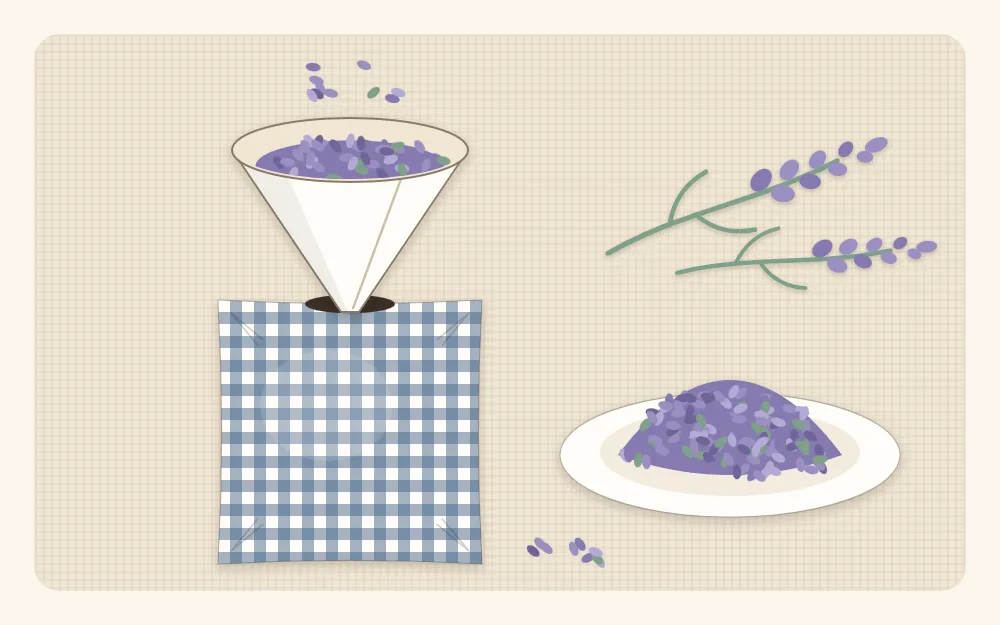
Tip
Work over a tray or a baking sheet with a rim. Spilled buds collect in the tray and can be tipped straight back into the bowl.
Style 2: Tied bag
This version is hemmed at the top and tied closed, so the filling can be replaced when the scent fades.
- On each short end of the 4 x 11 inch rectangle, press 1/4 inch (6 mm) to the wrong side, then press under another 3/4 inch (2 cm). Stitch close to the inner fold. The piece now measures 4 x 9 inches (10 x 23 cm).
- Fold the rectangle in half, right sides together, so the two hemmed ends meet. It now measures 4 x 4.5 inches.
- Sew down both sides with a 1/4-inch seam, backstitching firmly at the hemmed top.
- Clip the two bottom corners at the fold, turn right side out and press.
- Fill the bag about two-thirds full using the paper funnel.
- Gather the neck about 1 inch (2.5 cm) below the top edge, wrap the ribbon around twice and tie a firm double knot, then a bow.
For extra security, sew the center of the ribbon to one side seam before filling, so it cannot slip off or go missing.
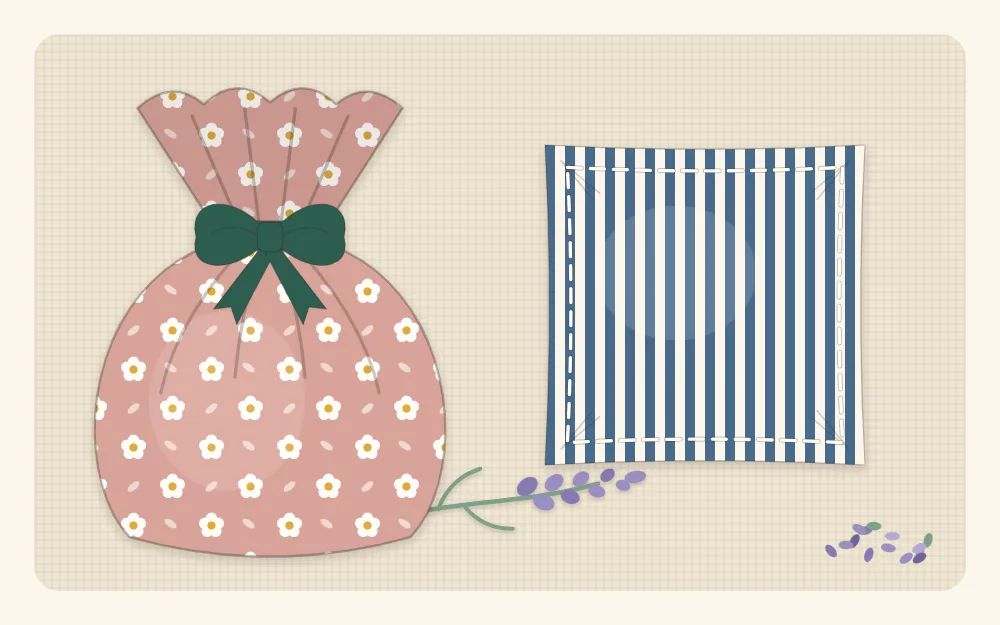
Filling: lavender, rice or both
- Lavender only gives the strongest scent and a light, soft sachet.
- Half lavender, half rice makes the lavender go further and adds a little weight, so the sachet stays put in a drawer. Stir the two together in a bowl before filling.
- A small pinch of fiberfill or tiny fabric trimmings at the corners can pad out a larger sachet. Using trimmings as filling is one of several ideas covered in the guide on what to do with tiny fabric scraps.
Make sure the buds are completely dry before sewing them in. Any dampness in the filling can lead to a musty smell or mold.
Watch out
Lavender sachets are not toys. Keep them away from babies, young children and pets, who may chew them open. Sachets containing rice should stay dry and should not be heated. Anyone sensitive to fragrance may prefer a rice-heavy mix or no sachet at all.
Where to use them
- In drawers, between folded sweaters, scarves or bed linen
- Hung from a coat hanger in a closet, with a ribbon loop caught in the seam
- In a suitcase between trips
- Tucked into a gift parcel. Sachets pair well with other small makes in a bundle, and there are more combinations in the list of scrap fabric gift ideas.
Avoid placing a sachet directly against delicate or pale fabrics for long periods. Slip it into a corner of the drawer or wrap it in a piece of tissue instead.
Refreshing and replacing
The scent fades gradually. To wake it up, squeeze and roll the sachet gently between your hands to crush the buds a little. When that no longer works, untie a bag-style sachet, tip out the old filling and add fresh buds. For a stitched sachet, unpick an inch or so of one seam, refill and sew it closed again.
Sachets cannot be washed with the filling inside. Empty a refillable bag before washing the fabric, and let it dry fully before refilling.
Common mistakes
- Buds leaking at the corners. The corners were clipped too close, or the stitch length was too long.
- A lumpy closing. The sachet was overfilled. Tip a little out before stitching the gap.
- A ribbon that slides off. Tie it lower on the neck and wrap it twice, or stitch it to the side seam.
Variations
- Patchwork front. Sew four 2.5-inch (6.5 cm) squares into a four-patch that measures 4.5 inches square, and use it as one side.
- Envelope back. Make a tiny removable cover with two overlapping back panels, the same idea as the back of a patchwork cushion cover, and slip a plain muslin sachet inside.
- Hanging loop. Fold a 4-inch (10 cm) piece of ribbon in half and sandwich it in a corner, loop pointing inward, before sewing the square.
Frequently asked questions
What fabric is best for lavender sachets?
Tightly woven, light to medium weight natural fabrics such as quilting cotton, shirting or linen. Loose weaves let small buds and dust work their way out, and very thick fabric holds the scent in.
How much lavender does a small sachet need?
A 4-inch (10 cm) square sachet takes roughly 1/4 to 1/3 cup of dried buds. Fill it until it is plump but still soft enough to squeeze, so the gap closes easily.
Can rice be mixed with the lavender?
Yes. A half-and-half mix of dried lavender and uncooked white rice stretches the lavender and adds weight. Keep sachets with rice dry and do not heat them.
How can a lavender sachet be refreshed?
Gently squeeze and roll the sachet to crush the buds and release more scent. When that stops working, replace the filling, either by untying a bag-style sachet or unpicking a short section of seam.