Scrap Fabric Scrunchie: A Classic Hair Tie From One Strip
Sew a classic scrunchie from a single strip or pieced scraps, with the right elastic length and a neat way to close the gap.
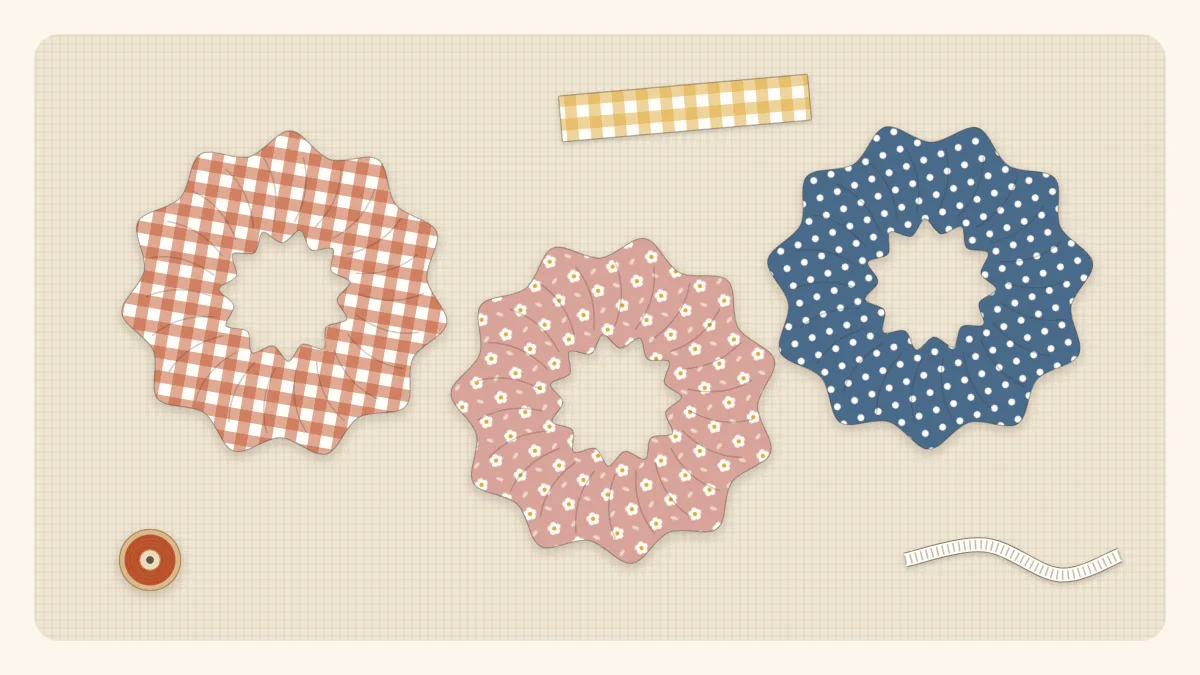
Project at a glance
Materials
- Fabric strip, 3.5 x 22 in (9 x 56 cm), single or pieced
- 1/4 in (6 mm) elastic, 8 in (20 cm)
- 2 safety pins
- Thread and a hand-sewing needle
- Pins or clips
- Scissors or rotary cutter, ruler and mat
- Iron
One long strip, one short piece of elastic and two seams: a scrap fabric scrunchie is about as simple as sewing gets. It is also a rare project that welcomes fabrics many others reject, including slippery satin remnants, soft rayon, shirt offcuts and narrow leftovers from a dress. If no single scrap is long enough, shorter pieces can be joined end to end, and the gathers hide the seams completely.
Sizes at a glance
The classic size is a good first scrunchie. The other two use the same steps with different cut sizes.
| Style | Fabric strip | Elastic, 1/4 in (6 mm) wide | Finished band width |
|---|---|---|---|
| Classic | 3.5 x 22 in (9 x 56 cm) | 8 in (20 cm) | 1.5 in (4 cm) |
| Skinny | 2.5 x 18 in (6.5 x 46 cm) | 8 in (20 cm) | 1 in (2.5 cm) |
| Oversized | 5 x 30 in (13 x 76 cm) | 8.5 in (21.5 cm) | 2.25 in (5.5 cm) |
The band width is the strip width minus 1/2 inch (1.3 cm) for the seam, divided by two. The strip is two and a half to three and a half times the length of the elastic, which is what creates the gathers; a longer strip means a fuller ruffle.
Materials
- One fabric strip in the size above, or pieced scraps (see below)
- 1/4-inch (6 mm) elastic, 8 inches (20 cm) for the classic size
- Two safety pins, one small enough to pass through the tube
- Thread to match, pins or clips, hand-sewing needle
- Scissors or rotary cutter, ruler and mat, iron
Getting the elastic length right
Eight inches of elastic, overlapped by 1/2 inch, makes a 7.5-inch (19 cm) loop that suits average hair and wraps twice. For fine hair or a child, cut 7 inches (18 cm). For very thick hair or braids, cut 9 inches (23 cm). A quick test: the elastic should wrap around the wrist comfortably without stretching, plus the 1/2-inch overlap.
Piecing a strip from scraps
Cut pieces 3.5 inches wide in any lengths and sew them end to end, right sides together, with 1/4-inch (6 mm) seams. Each seam uses 1/2 inch of length, so four pieces 3.5 x 6 inches (9 x 15 cm) make a strip 22.5 inches long: 24 inches minus 1.5 inches for three seams. Press the seams open so they pass smoothly over the elastic. Anything between 20 and 24 inches works for the classic size.
Step by step
1. Sew the tube
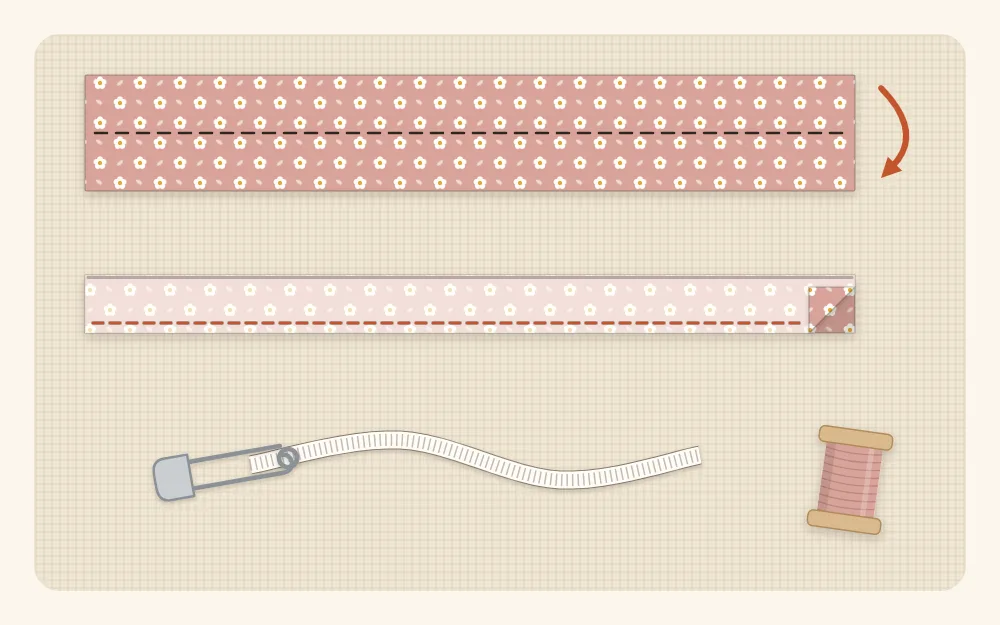
- Press the strip. Fold it in half lengthwise, right sides together, so the long raw edges meet. Pin or clip.
- Sew along the long edge with a 1/4-inch seam, from one short end to the other. Leave both short ends open.
- On slippery or loosely woven fabric, sew a second line of stitching or a narrow zigzag in the seam allowance for strength.
2. Turn it right side out
- Fasten the small safety pin to one layer at one short end.
- Push the pin into the tube and work it along the inside, gathering fabric onto it and pulling it back, until it comes out the far end.
- Pull gently until the whole tube is right side out. Remove the pin. Pressing is optional; an unpressed tube gives softer, rounder gathers.
3. Thread the elastic
- Fasten a safety pin to one end of the elastic. Pin the other end of the elastic to one open end of the tube with the second safety pin, so it cannot be pulled inside.
- Feed the first pin through the tube. The fabric gathers up along the elastic as it goes.
- When the pin comes out the far end, hold both elastic ends and check that the elastic is not twisted inside the tube.
- Overlap the elastic ends by 1/2 inch. Stitch back and forth across the overlap several times with a zigzag stitch, or sew it firmly by hand. A tight double knot also holds, though it leaves a small lump.
- Remove both pins and let the joined elastic slide inside the tube.
4. Close the gap
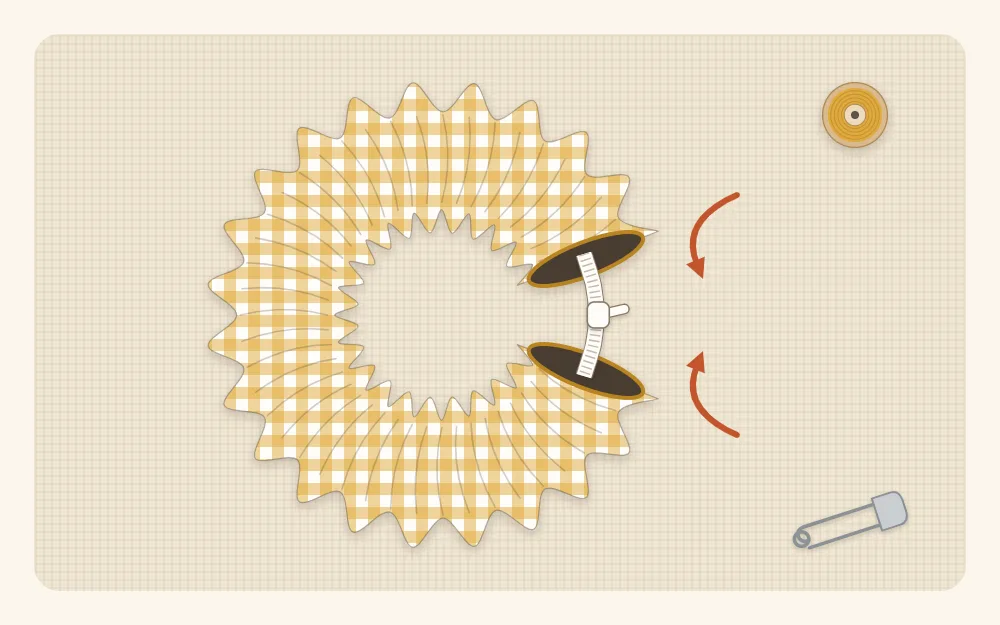
- Check that the fabric tube is not twisted around the elastic; the long seam should run along the same side all the way around.
- On one open end, fold the raw edge 1/4 inch to the inside all the way around.
- Slip the other raw end about 1/2 inch inside the folded end, lining up the long seams.
- Pull the join away from the elastic so the fabric lies flat. Stitch straight across by machine, about 1/8 inch (3 mm) from the fold, backstitching at both ends. Keep the elastic out of the way of the needle.
- For an invisible finish, sew the fold down by hand with small ladder stitches instead.
- Slide the fabric around so the join is hidden in the gathers.
Tip
Place the closing seam next to one of the piecing seams, or at the long seam side of the band. Tucked into the gathers there, it is very hard to spot.
Watch out
Do not press over the elastic with a hot iron; heat can weaken it. If the fabric needs pressing, press the tube before the elastic goes in.
Choosing scraps that work
- Quilting cotton is the easiest to sew and makes a crisp, full scrunchie.
- Lawn, voile, rayon and satin give soft, drapey gathers and are gentle on hair. Use plenty of pins or clips and a fine needle.
- Velvet, corduroy and flannel make cozy cold-weather versions. Thicker fabrics suit the classic or oversized widths, not the skinny one.
- Knits such as jersey work well; use a ballpoint needle and a narrow zigzag so the seam stretches.
- Avoid stiff canvas and heavy denim, which will not gather.
Common mistakes
- The elastic disappears into the tube. The tail end was not pinned to the fabric. Fish it out with the safety pin and start again.
- A twisted band. The elastic or tube turned while threading. Run a finger around the loop before stitching anything.
- The elastic join pulls apart. One pass of straight stitching is not enough. Zigzag over the overlap three or four times.
- A bulky closure. Too much fabric was tucked in. A 1/2-inch overlap is plenty.
- Sparse gathers. The strip was too short for the elastic. Add a piece to the strip; a ratio near three to one looks full.
- Fraying at the long seam. Common with satin and loose weaves. Finish the seam allowance with a zigzag before turning.
Variations
- Color-blocked. Piece the strip from two or three contrasting prints of equal length.
- Bow scrunchie. Sew a 3 x 14 inch (7.5 x 36 cm) tube with angled ends, turn it, and knot it once around the finished scrunchie.
- Button accent. Stitch a covered button over the closing seam; the method is in fabric covered buttons from scraps. Skip buttons on anything made for a child under three.
- A matching set. The same prints make a coordinating fabric scrap headband.
Scrunchies in two or three prints, slipped over a card or tied together with a strip of fabric, make an easy small present; more options are gathered in the list of scrap fabric gift ideas. For other quick first makes, see the guide to easy fabric scrap projects for beginners.
Frequently asked questions
How long should the elastic be for a scrunchie?
Eight inches of 1/4-inch elastic, overlapped by 1/2 inch, suits most hair. Cut 7 inches for fine hair or a child and 9 inches for very thick hair. The elastic should wrap the wrist comfortably without stretching.
What size fabric strip makes a classic scrunchie?
A strip 3.5 inches wide and 22 inches long makes a band about 1.5 inches wide with full gathers. Anything from 20 to 24 inches long works; a longer strip gives a fuller ruffle.
Can a scrunchie be made from several small scraps?
Yes. Sew pieces of the same width end to end with 1/4-inch seams and press the seams open. Each seam uses 1/2 inch of length, and the gathers hide the joins.
Can a scrunchie be sewn by hand?
Yes. Sew the long seam with a small backstitch, which is strong enough to hold when the band is stretched, and close the ends with a ladder stitch.