Easy Fabric Scrap Projects for Beginners: Where to Start
Ten first projects for a full scrap bin, ordered from the smallest pieces to the largest and from the simplest sewing to the next step up.
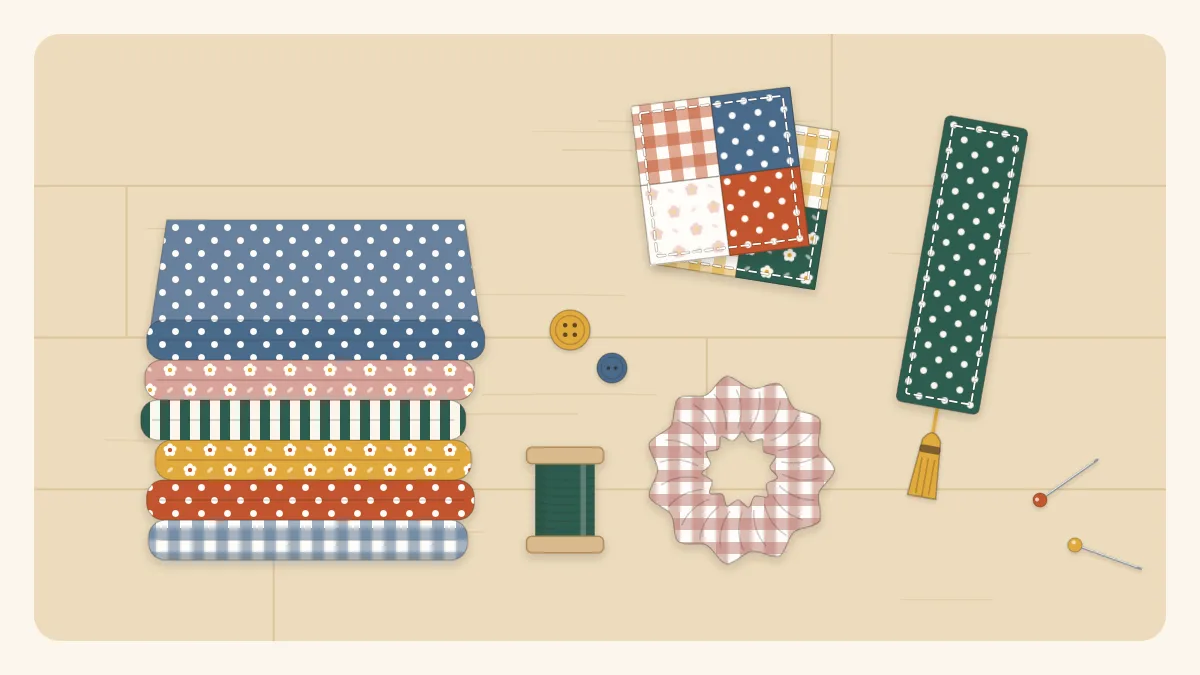
The best easy fabric scrap projects have three things in common: they use pieces you already have, they forgive a wobbly seam, and they are finished in one sitting. A full scrap bin can feel like a chore waiting to happen, but most of what is in it is already the right size for something small and useful. The trick is to match the project to the scrap, not the other way around.
The ten projects below run from the smallest pieces to the largest, and roughly from the simplest sewing to the slightly more involved. Start wherever your scraps are, not at number one.
Before you start: look at what you have
Tip the bin out and make three rough piles. Long, narrow pieces go in one pile as strips. Pieces that are roughly as wide as they are tall go in a second pile as squares. Everything smaller than about 2 inches (5 cm) across goes in a third pile as crumbs. That is all the sorting a first project needs.
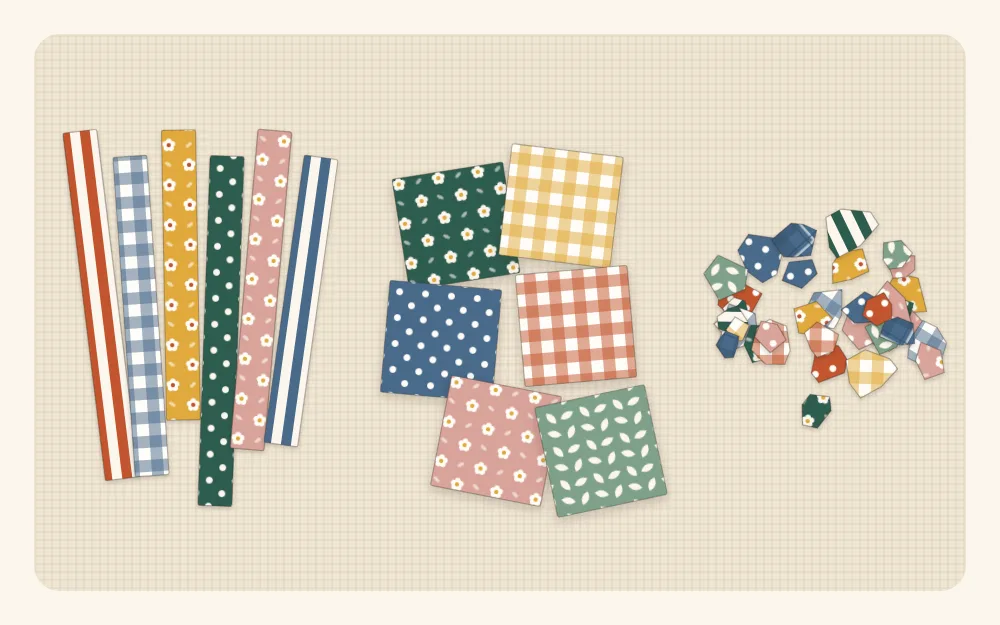
Whichever pile is tallest tells you where to begin. A heap of strips points toward scrunchies and key fobs. A stack of squares points toward coasters and patchwork. A mountain of crumbs points toward buttons and stuffing.
Tip
Press scraps before you judge them. A crumpled piece always looks smaller and less promising than it is, and a flat one is far easier to cut accurately.
Projects for the smallest pieces
1. Fabric-covered buttons
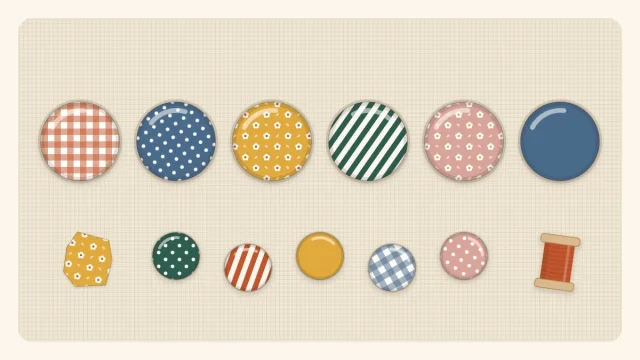
A covered button needs a circle of fabric barely bigger than a coin, which makes it the natural home for the tiniest pretty scrap in the bin. Cover-button kits snap together by hand, with no sewing at all. The finished buttons can go on hair ties, magnets or the center of a cushion. Keep finished buttons away from children under three, since they are small parts.
2. Bookmarks
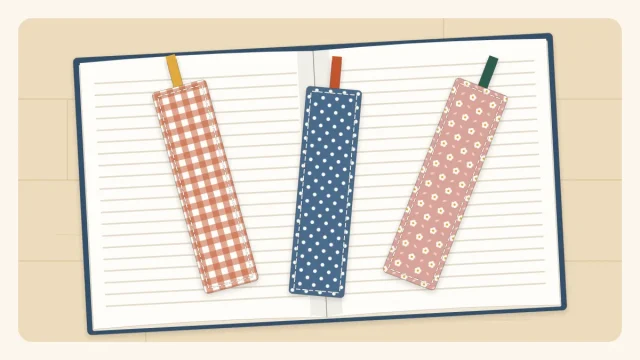
Two narrow rectangles and a strip of interfacing make a bookmark. The sewing is one lap around the edge, and the result is useful straight away. Fabric scrap bookmarks are a good first project because the seams are short and straight and nothing has to fit anything else.
3. Lavender sachets
A sachet is two small squares sewn together, filled and closed. It teaches the basic sequence used in dozens of other projects: sew right sides together, leave a gap, turn, fill, close. Sachets are for drawers and closets, not for play, so keep them out of reach of small children and pets.
Projects for squares
4. Coasters
Squares of about 5 inches (13 cm) become coasters with a layer of batting between them. A set of four uses up eight squares and gives real practice at topstitching, which is the skill that makes handmade things look neat. The full method is in the fabric scrap coasters tutorial.
5. A pincushion
Four small squares sewn into a block, backed with a fifth piece and stuffed, make a pincushion. It is a first taste of patchwork at a size where mistakes barely show, and every sewing space needs one anyway.
6. A four-patch block
Four squares sewn two by two is the simplest patchwork block there is. It is worth making once just to learn how seams meet at a center point. The guide to patchwork for beginners walks through the four-patch and the nine-patch, including how to sew an accurate 1/4-inch seam.
Projects for strips
7. A scrunchie
One long strip, one length of elastic and two seams. If no single strip is long enough, shorter pieces can be joined end to end, which makes the scrunchie look even better. The scrap fabric scrunchie is the classic first project with strips.
8. Bunting
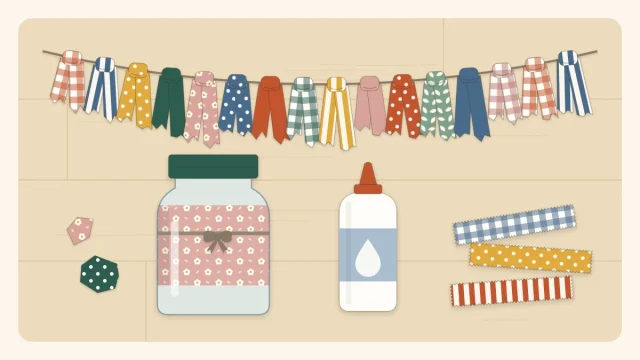
Triangle pennants can be cut from strips or from odd leftover corners. The simplest version is a single layer cut with pinking shears and tucked into folded tape, so the only sewing is one long line across the top.
9. A key fob
A short strip folded around a firm core and clamped into key fob hardware is a ten-minute project once you have made the first one. It is also a good introduction to sewing through several layers.
One step up
10. A small zipper pouch
A lined pouch is the project many beginners put off because of the zipper. In practice, a short zipper on a flat pouch is the easiest zipper there is. Save this one until you are comfortable sewing straight seams and turning a project right side out, then give it a try with two scraps you love.
Choosing your first project
| If you have mostly | Start with | You will practice |
|---|---|---|
| Tiny pieces under 2 in (5 cm) | Covered buttons | Cutting circles, centering a print |
| Narrow rectangles | Bookmarks | Straight seams, turning corners |
| Squares around 5 in (13 cm) | Coasters | Layering, topstitching |
| Small squares | Four-patch block | Accurate seam allowance, matching seams |
| Long strips | Scrunchie | Sewing a tube, threading elastic |
A few habits that make every project easier
- Stick to woven cotton at first. Quilting cotton and similar weights do not stretch or slip, so they stay where you put them. Set knits, satins and anything slippery aside for later.
- Change the needle. A fresh universal needle solves a surprising number of skipped stitches and puckers.
- Shorten the stitch slightly for small things. A stitch length around 2 mm holds tiny seams together better when the project is turned and stuffed.
- Backstitch at the start and end. Small projects get turned, poked and filled, and seams that are not secured will open.
- Clip corners before turning. Cutting across the corner, close to the stitching but not through it, gives a sharper point.
Watch out
A rotary cutter is sharp enough to cut through several layers at once. Close the blade guard every time you put it down, cut away from your body, and keep it and a hot iron well out of reach of children.
What not to worry about yet
Matching prints perfectly, owning every tool, and using up every last piece are all things that can wait. Scrap projects look good because the fabrics are mixed, not in spite of it. A coaster in four unrelated prints reads as cheerful. A bookmark with slightly uneven stitching still marks the page.
Pick the pile, pick the project, and finish one thing. The second one always goes faster, and the bin gets a little lighter each time.
Frequently asked questions
What is the easiest thing to make from fabric scraps?
A flat bookmark or a covered button is about as simple as it gets. A bookmark needs two narrow rectangles and one line of stitching around the edge, and a cover-button kit needs no sewing at all.
What kind of fabric scraps are best for beginners?
Woven cotton in a quilting weight is the easiest to handle. It does not stretch or slip, it presses flat, and it holds a crease. Knits, satins and very thick fabrics are better left until straight seams feel comfortable.
Do I need a sewing machine for scrap projects?
No. Most small scrap projects can be sewn by hand with a short backstitch, and some need no sewing at all. A machine is faster and gives very even stitches, but it is not a requirement.
How small is too small to keep?
Pieces under about 1 inch (2.5 cm) across are hard to sew with a 1/4-inch seam allowance on each side. They can still be used as stuffing or in crumb piecing, but it is fine to let them go.