How to Sort Fabric Scraps So You Actually Use Them
A simple three-pass system for a messy scrap bin: sort by size first, then color, then fiber, and decide what is worth keeping.
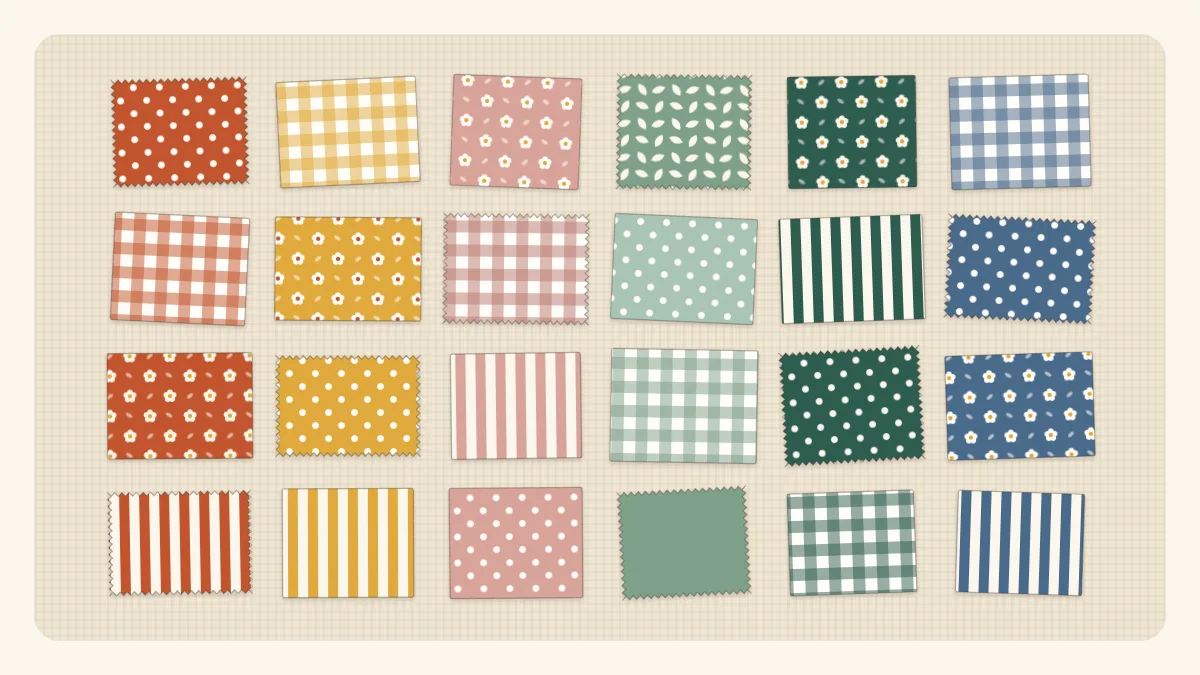
Learning how to sort fabric scraps is less about tidiness and more about being able to find the right piece in under a minute. A bin where everything is mixed together hides what is in it, so the same few scraps on top get used and the rest sink. A simple sort, done once and then kept up in small doses, turns the pile into a working supply.
The order matters. Sort by size first, then by color, and only then by fiber. Size decides what a scrap can become, so it is the most useful thing to know about any piece.
Step one: sort by size and shape
Clear a table, tip everything out, and press anything badly crumpled. Then make four groups based on shape alone, ignoring color completely.
- Strips: pieces at least 1 1/2 inches (4 cm) wide and noticeably longer than they are wide.
- Squares and chunks: pieces roughly as wide as they are tall, from about 2 1/2 inches (6.5 cm) up to fat-quarter leftovers.
- Triangles and odd shapes: corners cut off other projects, curved offcuts, pieces with a bite taken out of them.
- Crumbs: anything smaller than about 2 inches (5 cm) in every direction.
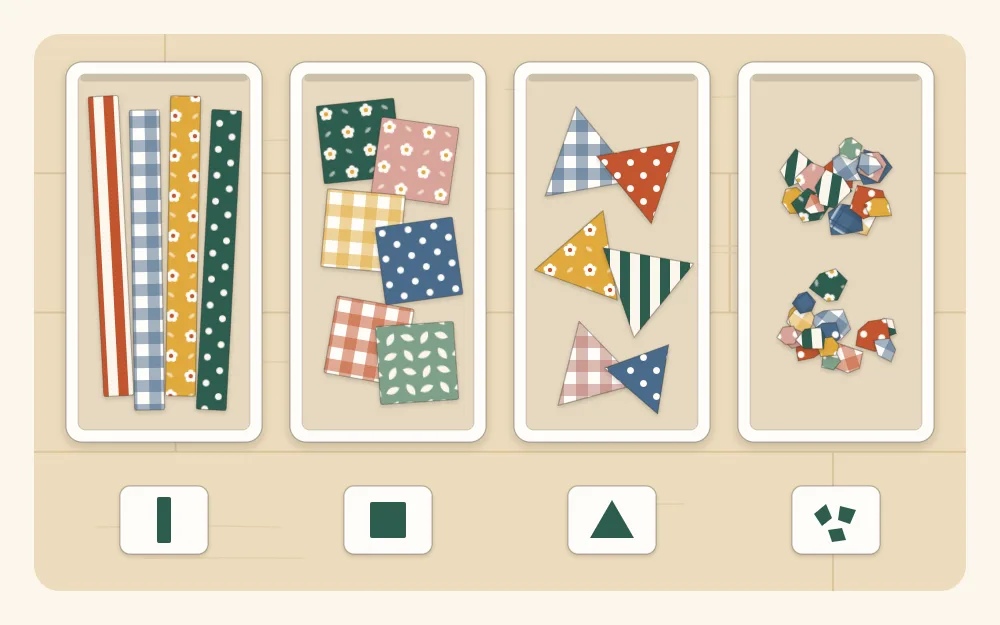
Four containers are enough. Shoeboxes, baskets or clear bins all work, as long as each one holds a single shape. A small drawing of the shape on the front of each container is quicker to read at a glance than a written label.
Tip
Pieces larger than a fat eighth, around 9 x 21 inches (23 x 53 cm), are not really scraps. Fold them and put them back with the yardage, where they will be found when a pattern calls for a small cut.
Step two: sort by color
Once the shapes are separated, color sorting is fast because each container holds far fewer pieces. Within the strips and the squares, group by color family in rainbow order: reds, oranges, yellows, greens, blues, purples, then neutrals. Running from warm to cool makes it easy to see which colors are overflowing and which are nearly gone.
Multicolored prints cause the most hesitation. Hold the scrap at arm’s length and go with the color that reads strongest from a distance, which is usually the background. If it truly belongs nowhere, start a small “mixed” group and do not let it grow past a handful.
Keep lights, mediums and darks in mind as you go. A color pile that is all medium tones will be hard to use on its own. Knowing that early helps when you come to combining scrap fabric colors in an actual project.
Crumbs do not need color sorting. One jar or bag for all of them is fine, since crumb projects look best when everything is mixed.
Step three: separate by fiber
Fiber is the last sort, and for many scrap bins it only takes a few minutes. The aim is to keep quilting-weight woven cotton apart from everything else, because that is what most scrap projects are written for.
| Fiber or type | Where it goes | Why |
|---|---|---|
| Woven cotton, quilting weight | Main scrap containers | Stable, easy to press, safe choice for pot holders and patchwork |
| Linen and cotton-linen blends | With cotton, or a small group of its own | Behaves much like cotton but frays more |
| Knits and stretch fabrics | Separate bag | Stretch distorts patchwork; useful for headbands and scrunchies |
| Polyester, satin, synthetics | Separate bag | Can melt under a hot iron; not for anything used near heat |
| Denim, canvas, upholstery weights | Separate bag | Too thick to mix with light cottons in the same seam |
| Felt and wool | Separate bag | Does not fray; good for appliqué details and pincushion filling |
If you are not sure what a scrap is made of, treat it as a synthetic and keep it out of the cotton. That matters most for kitchen projects, where only 100% cotton belongs.
Trim as you sort, or sort and trim later
There are two ways to handle odd-shaped pieces. The first is to leave them as they are and cut only when a project calls for it. The second is to cut scraps down to a small set of standard sizes as part of sorting, so they are ready to sew.
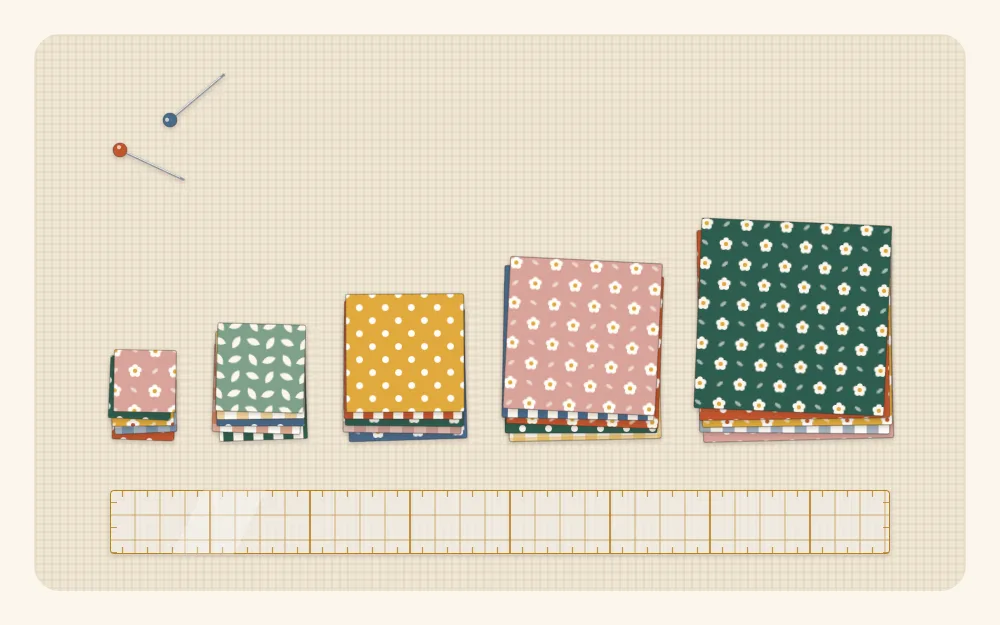
Pre-cutting takes longer up front but pays back every time you start something. A stack of 2 1/2-inch squares is a project waiting to happen; a tangle of odd shapes is still a job. If you choose to trim, the guide to cutting small fabric scraps covers which sizes are worth cutting and how to get the most from an irregular piece.
A middle path works well for most people: trim the pieces that are obviously close to a standard size, and leave the rest whole.
What to keep and what to let go
Not every scrap earns its space. Sorting is the moment to be honest about that.
Keep
- Any woven cotton piece at least 1 1/2 inches (4 cm) square.
- Strips at least 1 inch (2.5 cm) wide, which suit string piecing and fabric twine.
- Small pieces of prints you love, even if tiny. They suit covered buttons and appliqué.
- Clean selvages and trimmings, if you use them for stuffing.
Let go
- Pieces that are stained, faded in streaks, or weakened so they tear easily.
- Fabrics you actively dislike. They will not improve in the bin.
- Slivers too narrow to hold a 1/4-inch seam on both sides.
- Anything with a smell that washing has not removed.
Letting go does not have to mean the trash. Very small clean bits can become stuffing, and there are more options in the guide to what to do with tiny fabric scraps. Larger pieces you simply do not like can be passed on to another sewist, a school or a craft group.
Watch out
Do not sort for a system you will not keep up. Twelve color bins times five sizes looks wonderful on day one and collapses within a month. Start with four containers and add a division only when one of them is clearly too full to search.
Keeping the system usable
The sort only lasts if new scraps have somewhere to go straight away.
- Keep an inbox. One small basket beside the cutting mat catches offcuts during a project.
- Empty it at the end of each project. Five minutes of sorting after the last seam is far easier than an afternoon twice a year.
- Set a limit. When a container will not close, that is the signal to make something from it or thin it out, not to buy a bigger container.
- Put the scraps where you sew. Scraps stored out of sight in a closet get forgotten. The fabric scrap storage ideas guide has options for small spaces.
A sorted bin changes how projects begin. Instead of digging and hoping, you look at the squares, see plenty of blue and green, and know at once what you can make this afternoon.
Frequently asked questions
Should fabric scraps be sorted by color or by size?
Size first. The size and shape of a scrap decide what it can be used for, so it is the most useful division. Color sorting comes second, inside each size group, and goes much faster once the shapes are separated.
What is the smallest fabric scrap worth keeping?
For sewing with a 1/4-inch seam allowance, a piece about 1 1/2 inches (4 cm) square is a practical minimum, since it finishes at 1 inch. Smaller bits can still be kept for stuffing or crumb piecing if you use those techniques.
Do I need to cut scraps to standard sizes when sorting?
No, it is optional. Pre-cutting makes scraps ready to sew and easy to stack, but it takes time. Many sewists trim only the pieces that are already close to a standard size and leave the rest whole.
How do I sort a print with many colors?
Look at it from arm's length and file it under the color that reads strongest, which is usually the background. Keep a small mixed group for prints that truly do not fit anywhere.